The Last Chance
A short film by Yvette Liao
The essence of imagery lies in recording, expressing, and conveying power; it is never merely about narration but about making the invisible visible. When I capture the emotions, struggles, and order of OCD patients through the lens, what I see is not the "other," but a more universal human condition—how we choose to live soberly and passionately despite our limitations. OCD is not a label; it is a form of existence. It is not a defect but an extreme way of perception. We are not presenting a disease but expressing a life that, even when trapped in cycles, still yearns for connection and struggles toward the light. From my early days of filming various promotional videos and documentaries to co-creating "The Last Chance" with my partners, I have always used media to build bridges for marginalized experiences. Media and imagery are the actions I have chosen. They do not escape pain or simplify reality; instead, they approach misunderstood life scenes with visual sharpness and aesthetic beauty. I do not wish to merely tell stories. I want every frequency of human existence to be heard.
"Content Structure and Analysis"
1. Structure: The film's structure itself serves as a metaphor for symptoms, employing a circular narrative: anxiety eruption and ritualistic behavior (dialing) → manifestation of intrusive thoughts (catastrophic imagination) → brief solace in reality (call connection) → denial and self-loathing → return to the starting point of anxiety. This structure accurately reflects the essence of OCD: an inescapable Möbius strip. Every promise of "the last time" marks the beginning of the next cycle.
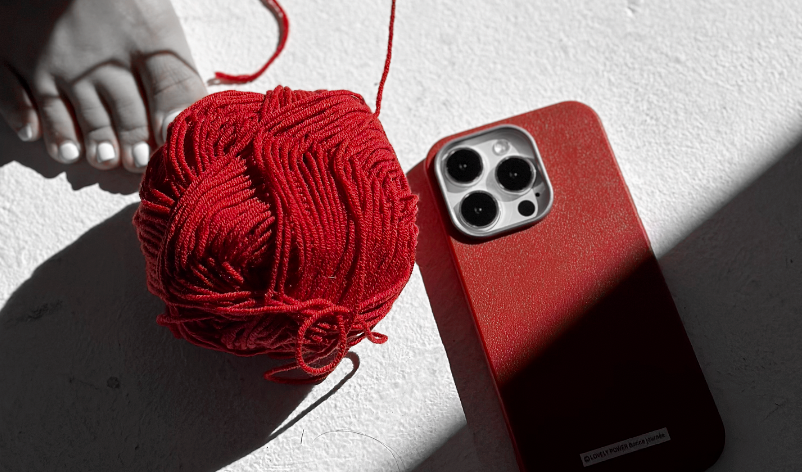
2. Visuals and Metaphors: The spatial cage (grids and frames) is the most direct visual transformation of mental confinement. It restricts the dancer within the frame, just as their mind is imprisoned by the condition. The imagery of the red thread represents a more primal, organic, and harmful form of internal anxiety. Its entanglement is not mechanical but appears free, random, and yet inescapable. It is both a lifeline (the hope of connecting with loved ones) and a source of pain (an anxiety generator when the call fails). The thread connected to the phone naturally drops at the end, creating an unexpected visual effect of a "blood-sucking band" in the camera. This also conveys to OCD patients that there is no need to force their thoughts into perfect rituals; sometimes, improvisation can yield unexpected results. The camera employs extreme close-ups of fingers entangled by the red thread, reflections in pupils, and murmuring lips. The body is no longer a tool for expressing beauty but a site for bearing anxiety and performing compulsive rituals. This is also a visual representation of the Lacanian "objet petit a"—an object of desire that brings both immense hope (connection to reality) and immense anxiety (potential loss).
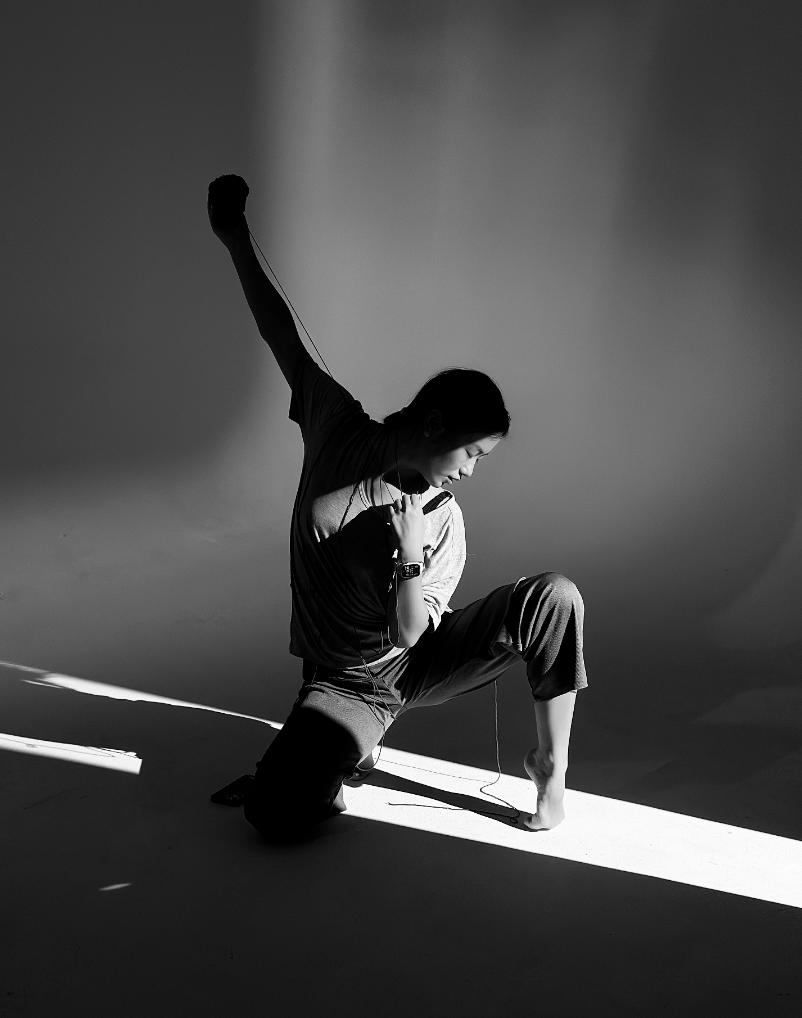
This work aims to provide a profound visual and sensory exploration of the inner psychological world of individuals with intrusive obsessive-compulsive disorder (OCD). It does not tell an external story but rather attempts to construct an internal "psychological topography," intuitively presenting the intrusiveness of obsessive thoughts, the ritualistic nature of compulsive behaviors, and the accompanying overwhelming anxiety, fear, self-fragmentation, and desperate seeking of anchors in reality.
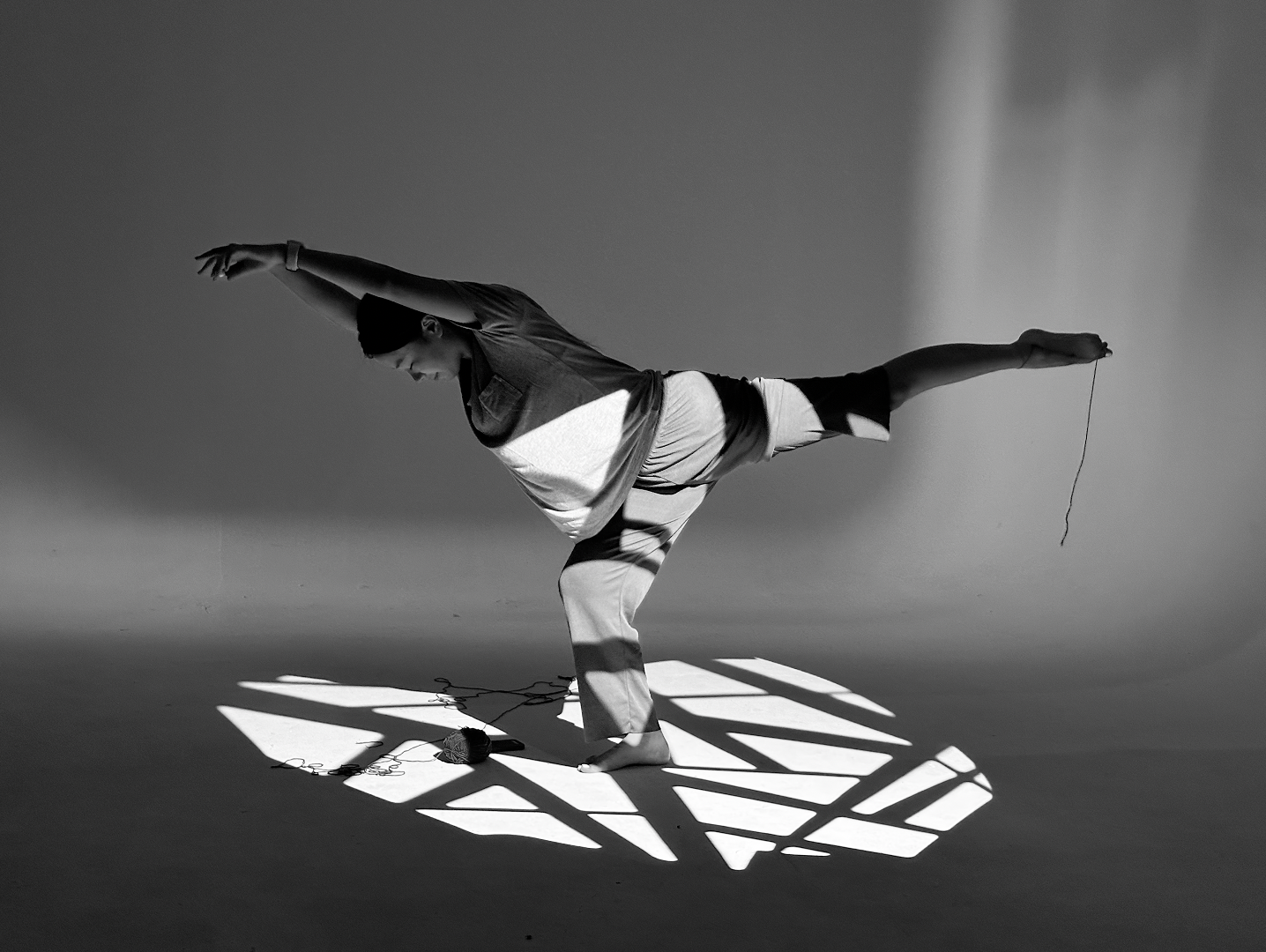
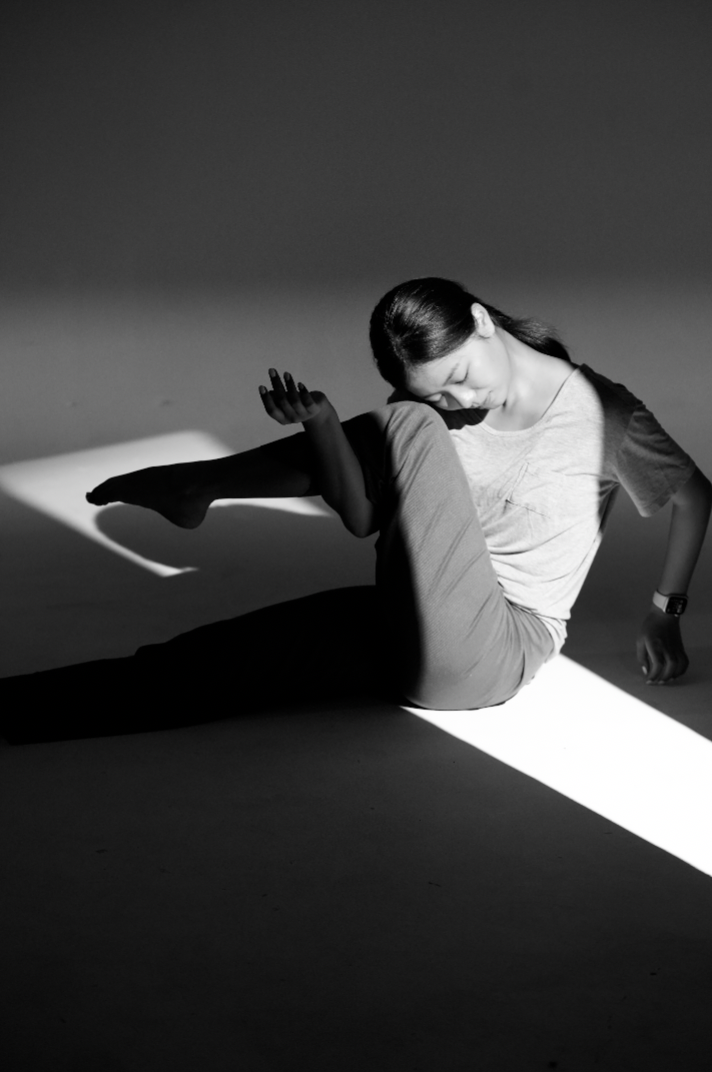
3. Light and Shadow: Light and shadow here are not merely for atmosphere but serve as direct writing of the mental state. The shape of light symbolizes the alienation of thought and dehumanized anxiety, while the warm, yellow light of reality represents short, fragile security. The gradient and conflict between the two constitute the patient's intense oscillation between "catastrophic imagination" and "reality testing."
4. Glitch Aesthetics: Glitch is not a simple imitation of technical failure but a perfect metaphor for mental "stagnation" and "intrusion." Screen tearing, color distortion, and signal interference—these visual noises are intuitive manifestations of obsessive thoughts suddenly intrude consciousness and disrupting normal thought processes.
5. Psychoanalytic Dimensions of Sound and Dialogue: We composed our own music, recorded in a professional studio, and applied reverberation cope with alternating left and right channels. The repetitive and dissonant notes in the music fill the space with anxiety and tension; the triple-time dance is both a solo of inner struggle and a group dance yearning for resonance. The structure, connecting the beginning and the end, allows the audience to personally experience the futility and powerlessness of trying to break through barriers while feeling the continuous internal tension. This undoubtedly further embodies the contradictions and struggles within OCD patients, making them more tangible through auditory sensations.
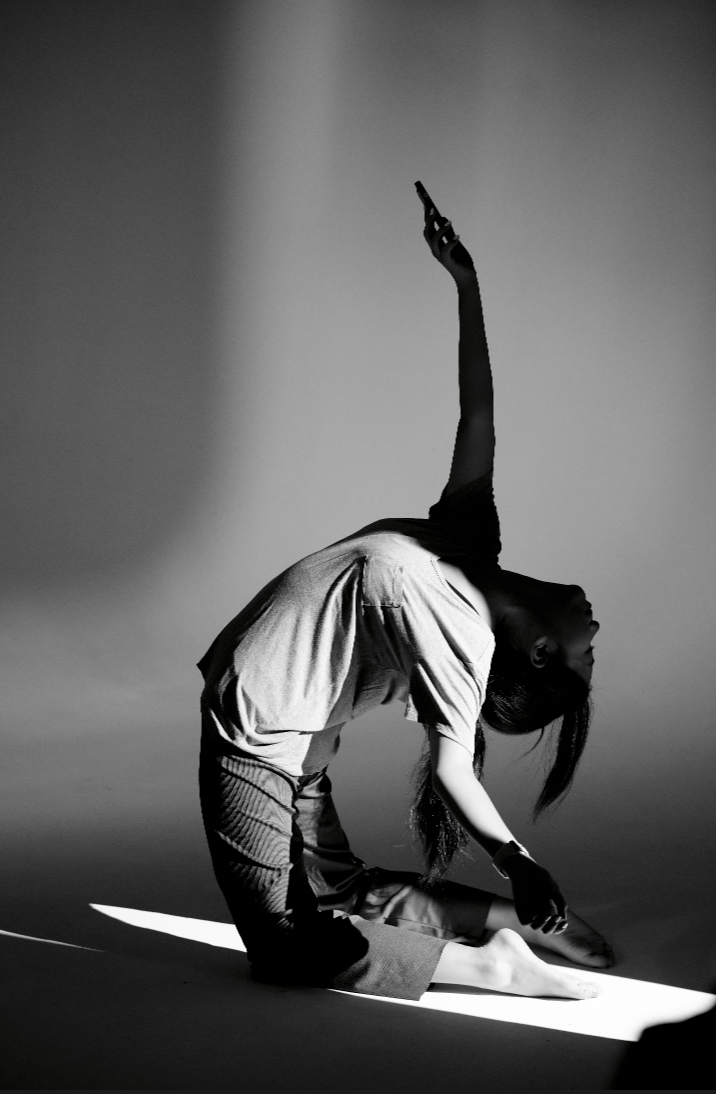
6. Emotional Concretization of Dance and Body: Through the body language of modern dance, we use continuous repetition and sudden interruptions as the core movement structure, symbolizing the cycle and abrupt intrusion of obsessive thoughts. The dancer's body swings between rigidity and burst, pulling and contraction, as if driven by an invisible force, hard to escape. In terms of spatial use, the dancer constantly attempts to break through boundaries but is pushed back to the starting point, creating a sense of inescapable dilemma. The dance does not pursue linear narrative but, through the cycle, dislocation, and imbalance of movements, allows the audience to personally experience the depressed psychology of being trapped in a mental cage.
"Public Welfare Appeal and Humanistic Care"
The ultimate goal of "The Last Chance" is to build a bridge of understanding. Like the short story "This Little Fish Cares." For OCD patients and those deeply affected by psychological struggles, we hope this work serves as a comfort of "being seen": your pain is real, it has its unique form and voice, you are not alone, and your voice matters. For the public and society, we hope this work can replace thousands of words and shatter those rash labels ("crazy," "overthinking," "germaphobe"). OCD is not a personality trait but a real, painful, and highly comsumed mental illness. It stems from an abnormal "way of functioning" in the brain, not a lack of willpower.
For the audience and society, this film is a gentle inquiry and appeal. It reminds us not to be indifferent bystanders and not to question the meaning of an individual's struggle. The significance of understanding and care does not lie in "curing" the entire beach but in seeing and respecting each individual's right to "care" and affirming the value of their every difficult fight. Our "seeing" and understanding mean gently taking the "little fish" from their hands and returning it to the sea of understanding and support. The patients care, and we care too.
Art cannot cure diseases, but it can illuminate those misunderstood dark corners and allow silent screams to be heard. "The Last Chance" is precisely such a beam of light, shining into that cyclical cage and saying to those inside: I see you, and I am willing to try to feel your world.